
Table of Contents
ToggleLast updated on March 20, 2026
If you’ve noticed a red, tender vein running along your leg, or you’re experiencing unexplained swelling and a deep ache in your calf, you may be dealing with a venous condition. Symptoms like these can be concerning and are often linked to problems affecting the veins in the legs.
Understanding superficial thrombophlebitis vs DVT is important, as the two conditions can appear similar but carry very different levels of risk. While superficial thrombophlebitis usually affects veins close to the skin and is often manageable, deep vein thrombosis occurs in deeper veins and can become a serious medical concern.
What is Superficial Thrombophlebitis?
Superficial thrombophlebitis is a condition where a blood clot forms in a vein just beneath the skin’s surface, causing inflammation. It most commonly affects the veins in your legs and is closely associated with varicose veins. While it can be uncomfortable, it’s usually not considered a serious medical concern.
The condition develops when blood flow slows in the superficial veins (the ones you can often see or feel through your skin). When a clot forms here, it triggers an inflammatory response that leads to localised pain, redness and tenderness along the affected vein.
What Is Deep Vein Thrombosis (DVT)?
Deep vein thrombosis (DVT) is a serious condition in which a blood clot forms in a major vein beneath the skin of the leg. These larger veins carry significant volumes of blood back to the heart, which is what makes DVT potentially dangerous.
The most serious risk of DVT is a complication called a pulmonary embolism (PE). This occurs when part of the blood clot breaks loose and travels through the bloodstream to the lungs. If the clot becomes lodged there, it can block blood flow and reduce oxygen levels in the body. A pulmonary embolism is a medical emergency and requires immediate treatment.
DVT can sometimes develop without obvious symptoms, which is part of what makes it so concerning. When symptoms do appear, they often include pain, significant swelling and a feeling of heaviness in the affected leg. As the signs can be subtle, DVT is sometimes only picked up during a medical examination or diagnostic imaging.
If you suspect you may have DVT, it’s important to seek medical attention promptly. Early diagnosis and treatment can significantly reduce the risk of serious complications.
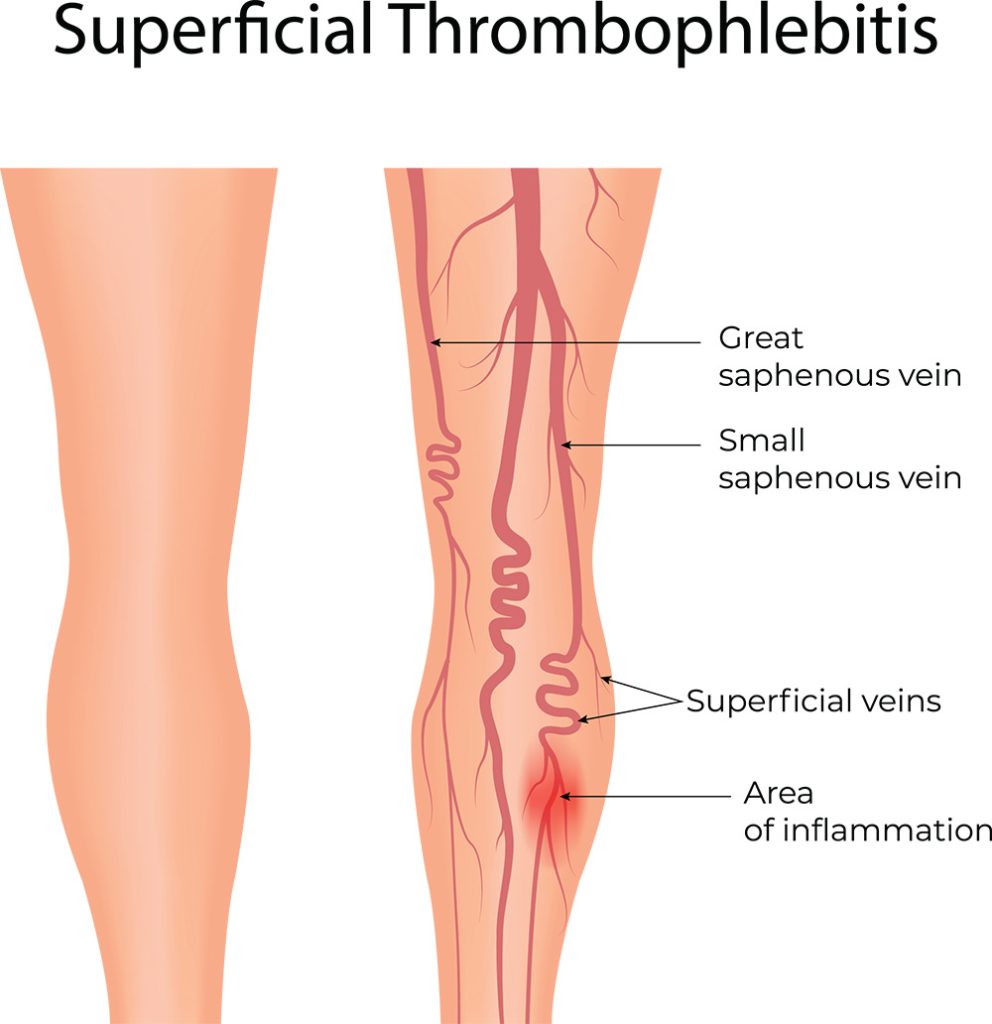
The key differences between superficial thrombophlebitis and DVT are in their location, severity and potential risk.
Superficial Thrombophlebitis vs DVT: Key Differences
Although both conditions involve blood clots forming within veins, they differ in location, severity and potential risk.
Understanding these differences is important, as one condition is typically mild and localised, while the other can lead to serious complications if left untreated.
| Feature | Superficial Thrombophlebitis | Deep Vein Thrombosis (DVT) |
|---|---|---|
| Where the clot forms | In a vein close to the skin’s surface | In a larger vein, deeper within the leg |
| Pain | Localised tenderness along the affected vein | Deep, persistent calf pain or cramping |
| Skin Changes | Redness, warmth and a firm “cord-like” vein | Swelling may occur, but the skin can appear normal |
| Risk Level | Usually low and rarely dangerous | Potentially life-threatening |
| Risk of Pulmonary Embolism | Very uncommon | Significant if left untreated |
Symptoms to Watch For
Knowing the symptoms of each condition can help you recognise when something needs medical attention and when it might be an emergency.
Symptoms of Superficial Thrombophlebitis
- A tender, cord-like vein that feels firm to the touch
- Redness or discolouration along the path of the vein
- Mild swelling around the affected area
- Warmth over the vein
- Discomfort that may worsen when standing or walking
Symptoms of DVT
- Swelling in one leg (especially the calf or thigh)
- A deep ache or cramping sensation in the leg
- Skin that feels unusually warm to the touch
- Discolouration, as the skin may appear reddish or bluish
- A feeling of heaviness or tightness in the leg
What Causes These Conditions?
Several factors can increase your risk of developing either superficial thrombophlebitis or DVT. Some of the most common causes and risk factors include:
Varicose veins
Enlarged or damaged veins, particularly those near the skin’s surface, can disrupt normal blood flow. When blood pools in these veins, it increases the likelihood of clot formation, especially within the superficial venous system.
Prolonged immobility
Sitting for long periods, whether on a long-haul flight, at a desk, or post-surgical recovery, can slow circulation in the legs. Reduced blood flow makes it easier for clots to develop.
Surgery or injury
Surgical procedures or physical trauma can damage blood vessels and temporarily limit movement. As part of the body’s natural healing response, the blood may become more prone to clotting, increasing the risk of both superficial and deep vein clots.
Hormonal factors
Hormones can influence the blood’s tendency to clot. Oral contraceptives, hormone replacement therapy and certain hormonal changes may thicken the blood slightly, raising the risk of clot formation in some individuals.
Pregnancy
During pregnancy, increased blood volume and pressure on the veins in the pelvis and legs can slow circulation. These changes, combined with hormonal shifts, make pregnant women more susceptible to developing blood clots.
Previous clot history
If you have experienced a blood clot in the past, your risk of developing another one is higher. This may be due to underlying clotting tendencies, vein damage, or other medical factors that persist over time.
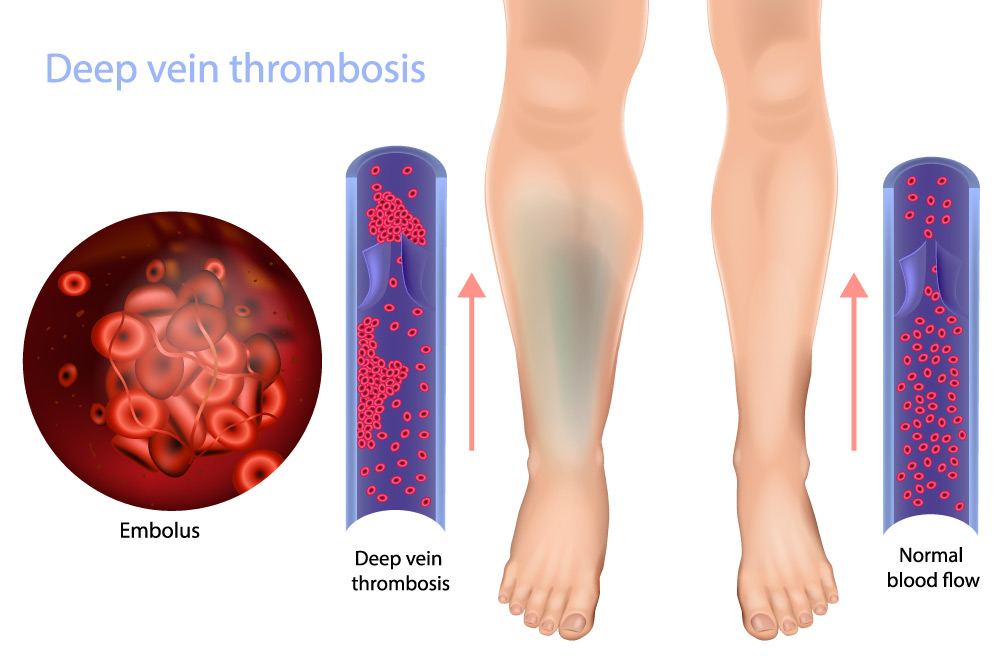
Treatment options will depend on the type of clot, its location and the severity of your symptoms.
Treatment Options
Treatment depends on the type of clot, its location and the severity of your symptoms. In all cases, getting a proper specialist assessment is the most important first step. Early treatment can prevent complications and give you peace of mind.
Treatment for Superficial Thrombophlebitis
Most cases of superficial thrombophlebitis can be managed conservatively. Your specialist may recommend:
- Compression stockings
These help improve blood flow in the affected leg and reduce swelling. - Anti-inflammatory medication
Over-the-counter options like ibuprofen can help relieve pain and reduce inflammation. - Activity modification
Light movement, including gentle walking, is usually encouraged to promote healthy circulation. Elevating the leg when resting can also help reduce swelling. - Monitoring
Follow-up appointments may be arranged to ensure the clot is resolving as expected. In some cases, your doctor may perform repeat imaging to confirm that the clot has not extended into the deeper venous system.
In most cases, superficial thrombophlebitis resolves within a few weeks with appropriate care.
Treatment for DVT
DVT requires more active treatment to prevent the clot from growing, breaking free or causing long-term vein damage. There are several treatment options available, depending on the size, location and severity of the clot:
- Anticoagulant medications (blood thinners)
This is the most common first-line treatment for DVT. Anticoagulants don’t dissolve existing clots, but they prevent new clots from forming and stop the existing clot from getting larger, giving your body time to break it down naturally. - Thrombolysis
For more significant clots, an interventional procedure called thrombolysis may be recommended. This involves inserting a catheter (a thin, hollow tube) into the vein and delivering clot-dissolving medication directly to the site of the blockage, helping to restore normal blood flow more quickly. - Endovascular thrombectomy
In some cases, a catheter-based procedure may be used to physically remove the clot from the blood vessel. This is typically reserved for larger or more acute clots. - Ongoing monitoring
After initial treatment, regular follow-up with your specialist is essential to ensure the clot is resolving.
The most important thing to remember is that early treatment makes a significant difference. If DVT is caught and treated promptly, the risk of serious complications like pulmonary embolism drops considerably.
How to Book an Appointment
At Vein Doctors Sydney, we are committed to providing personalised and compassionate care for patients seeking treatment for superficial thrombophlebitis or deep vein thrombosis. For more information on our services or to schedule a consultation at our clinic, please contact our friendly staff by either calling us on (02) 9023 9970, via our online form or by sending us an email.
Frequently Asked Questions
What’s the main difference between superficial thrombophlebitis and DVT?
Superficial thrombophlebitis affects veins close to the skin’s surface and is usually uncomfortable but not dangerous. DVT occurs in the deeper veins of the body, most often in the legs and carries a much higher risk of serious complications. The biggest concern with DVT is that the clot can break free and travel to the lungs, causing a pulmonary embolism.
How can I tell if I have DVT?
DVT often presents as swelling in one leg, a deep ache or cramping in the calf and skin that feels warm to the touch. However, some people experience very mild symptoms or none at all, which is part of what makes it so concerning. If you notice unexplained leg swelling or persistent pain in one leg, it’s worth getting checked by a specialist. A duplex ultrasound can confirm or rule out DVT.
Can superficial thrombophlebitis lead to DVT?
In some cases, yes. If a superficial clot extends into the deeper venous system, it can develop into DVT. This is more likely when the clot is located near the junction where superficial and deep veins connect, or when it occurs in certain larger superficial veins. That’s why monitoring is an important part of treatment, even when the initial clot appears to be superficial.
Is DVT more common after long-haul flights?
Prolonged sitting in a cramped position can slow blood flow in the legs, which increases the risk of clot formation. Staying hydrated, moving your legs regularly and wearing compression stockings during long flights can help reduce your risk.
This information is not intended to be used for diagnosis or treatment. It is aimed at presenting a perspective only and is not a substitute for a prescription. Anyone experiencing a medical condition should consult their doctor.

 Book A